The job site during operations
Operational observations on the working area in diamond tool applications

Operations involving diamond tools are often perceived as rapid and localized interventions. Core drilling, wall chasing, localized cutting, or controlled demolition activities may last only a few minutes and occupy apparently limited areas. In everyday practice, however, the job site continuously changes during these operations. The working area never corresponds solely to the point where the tool is operating. Around the machine, movements, temporary supports, cables, hoses, removed materials, support equipment, and access routes progressively develop and expand throughout the working day. This aspect becomes particularly evident in real working environments: interior renovations, technical rooms, stairwells, underground parking facilities, occupied buildings, or job sites where multiple activities are carried out simultaneously.
These are environments in which specialized operations must coexist with limited space, tight schedules, and the operational continuity of other site activities. During cutting or core drilling, the operator’s attention naturally focuses on the precision of the intervention, machine stability, and the progress of the operation itself. At the same time, however, the organization of the surrounding working environment progressively changes around that activity. Extension cords repeatedly repositioned, water hoses crossing walkways, residues accumulating along transit routes, slippery surfaces, or work areas extending beyond the initially planned boundaries are all common situations on real job sites.
Specialized operations rarely remain in the same location throughout the entire working day. Over the course of several hours, a handheld core drilling unit may be used in multiple rooms, while a wall chaser is continuously moved from one wall to another, or floor cutting operations require constant advancement along access routes and transit areas. More structured systems, such as track-mounted cutting equipment or diamond wire sawing operations - increasingly used in specialized interventions on structures and infrastructure - also progressively modify the operational layout of the surrounding area. Power units, pulleys, hoses, collection systems, and equipment handling activities require continuous control of the available space throughout the various stages of the operation.
Every relocation involves constant adjustments: electrical supplies must be repositioned, hoses moved, materials protected, and pathways kept accessible for other operators working on site. In many real working situations, specialized activities do not take place in isolated areas, but rather in environments shared with other operations. This frequently leads to a progressive overlap of equipment, materials, and transit routes that tends to increase throughout the day. Operational dynamics change even further when work is carried out at height, on scaffolding, aerial work platforms, or temporary structures. In these contexts, even relatively compact equipment requires careful management of available space, operator movement, and the positioning of support systems.
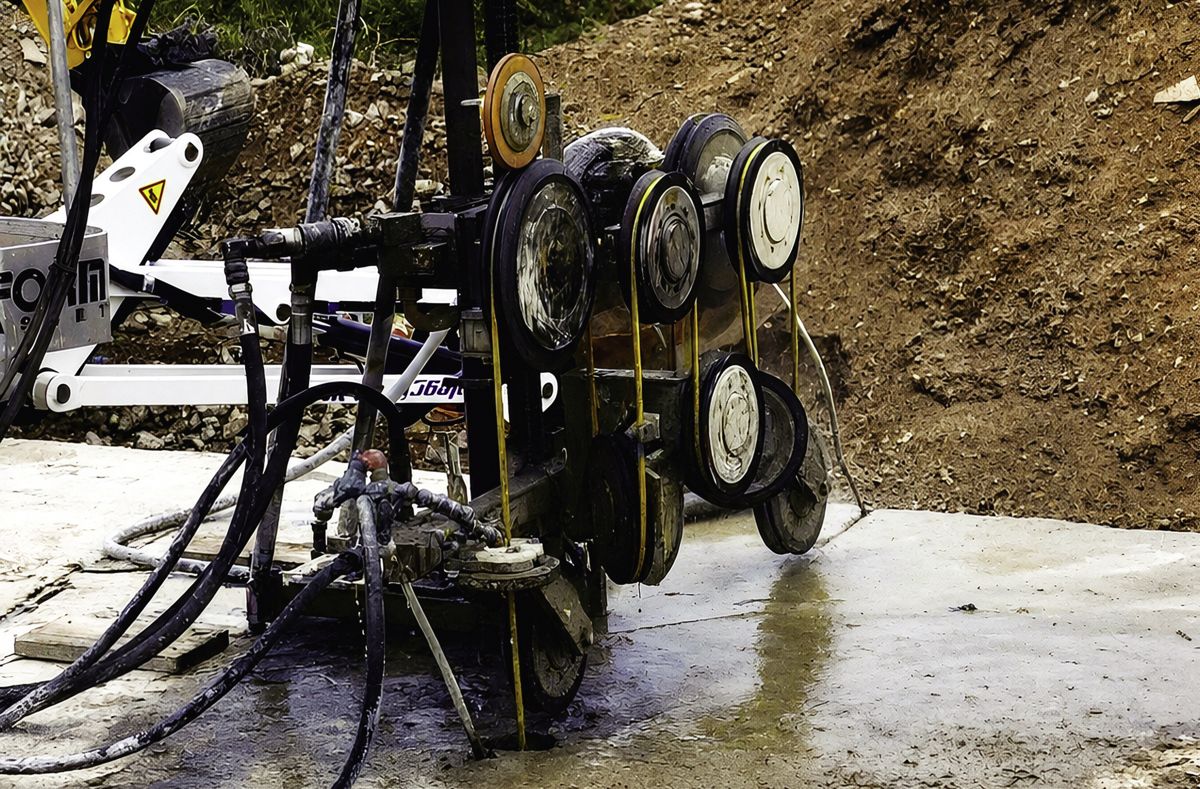
Similar situations are encountered during operations on bridge decks, in tunnels, technical rooms, or environments with limited ventilation, where the working environment naturally becomes compressed around the machine and the operators involved. Environmental conditions themselves may also influence job site operations. Rain, wind, humidity, or sudden weather changes can affect surfaces, accessibility, and operational continuity, requiring constant adaptation throughout the intervention. Modern specialized operations increasingly require continuous adaptation to the actual conditions of the job site. Even apparently simple interventions may involve multiple elements simultaneously: the tool itself, electrical power supply, water supply, extraction systems, residue collection, lighting, and material handling.
The quality of the operation depends not only on machine performance, but also on the ability to maintain control of the operational environment throughout every phase of the intervention. In many cases, problems do not arise during the cutting operation itself, but in the minutes that follow. A work area that is not immediately reorganized tends to expand, interfering with other operators or with normal site activities. Temporarily stored materials, residues left along transit routes, or improperly repositioned equipment can all affect the operational fluidity of the working environment. For this reason, spatial organization is becoming increasingly important in diamond tool applications.
Defining the intervention area, maintaining clear transit routes, containing what is generated during operations, and rapidly restoring initial working conditions all contribute to improved continuity and operational efficiency. Complementary equipment also becomes an integral part of the working method. Extraction systems, wet vacuums, collection containers, or even simple temporary solutions used to maintain order within the work area contribute to limiting the dispersion of materials and improving overall job site management. Operations involving diamond tools require precision, adaptability, and operational speed. In many situations, however, the quality of the final result also depends on everything that takes place around the operation itself.
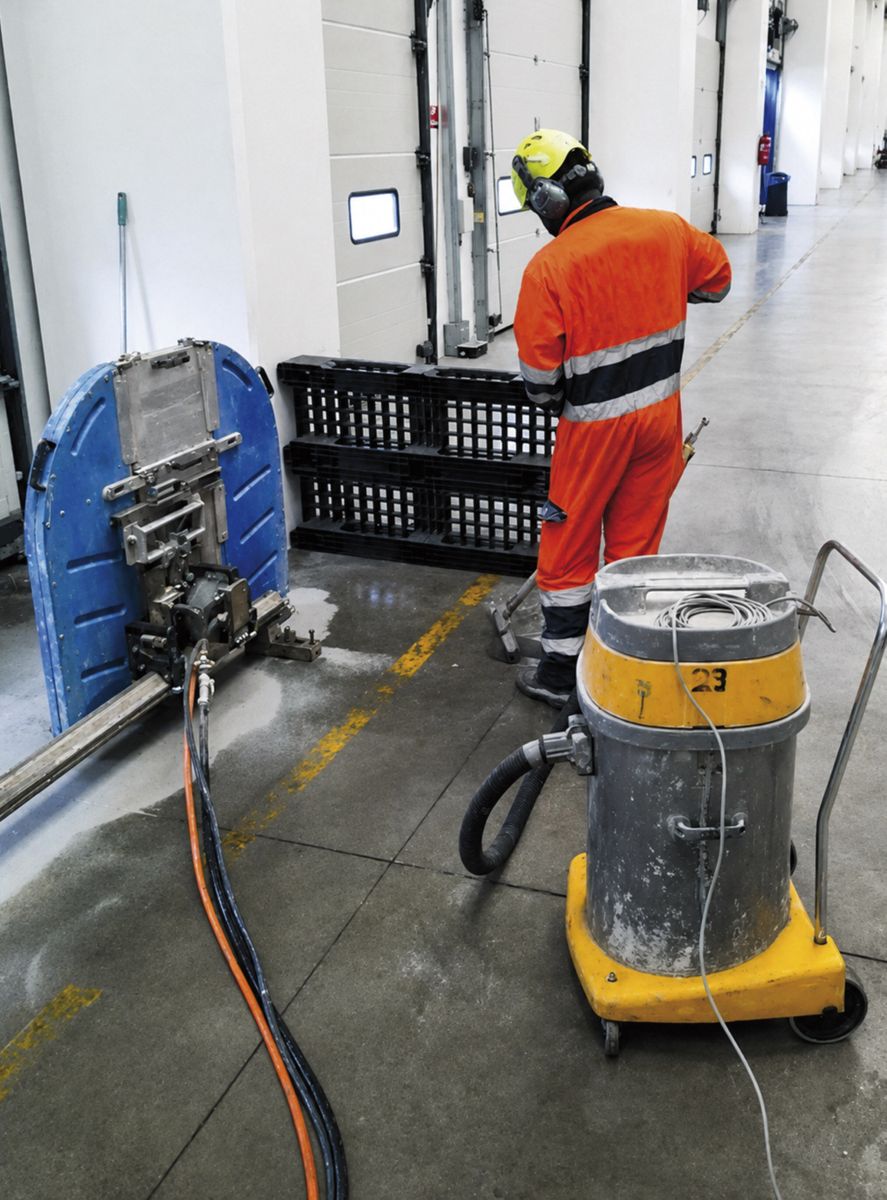
Maintaining a clear and controlled operational environment throughout the various phases of the intervention helps improve continuity, order, and the overall fluidity of day-to-day work. The efficiency of an operation does not depend solely on cutting speed or execution precision, but also on the ability to maintain control, continuity, and adaptability throughout every operational phase of the job site.