Diamond tools
Technology, materials, bonds and applications
A technical guide by Diamante A&T to industrial diamond and superabrasives
Diamond tools comprise a broad family of tools in which diamond is used as an abrasive or cutting material. Their design results from the combination of diamond characteristics, grit size, concentration, type of bond, tool geometry and operating conditions.
There is therefore no single type of “diamond tool”: the choice of diamond and of the system that retains it must be adapted to the material being processed, the machine, the type of operation and the required performance. Cutting ability and tool life are closely related requirements, and bond behaviour is essential to keeping the working surface active.
Industrial diamond
Diamond is used industrially because of its high hardness and wear resistance. In abrasive tools, however, its behaviour also depends on crystal shape and characteristics, grit size, fracture resistance and the ability of the tool-bond system to operate in a controlled manner.
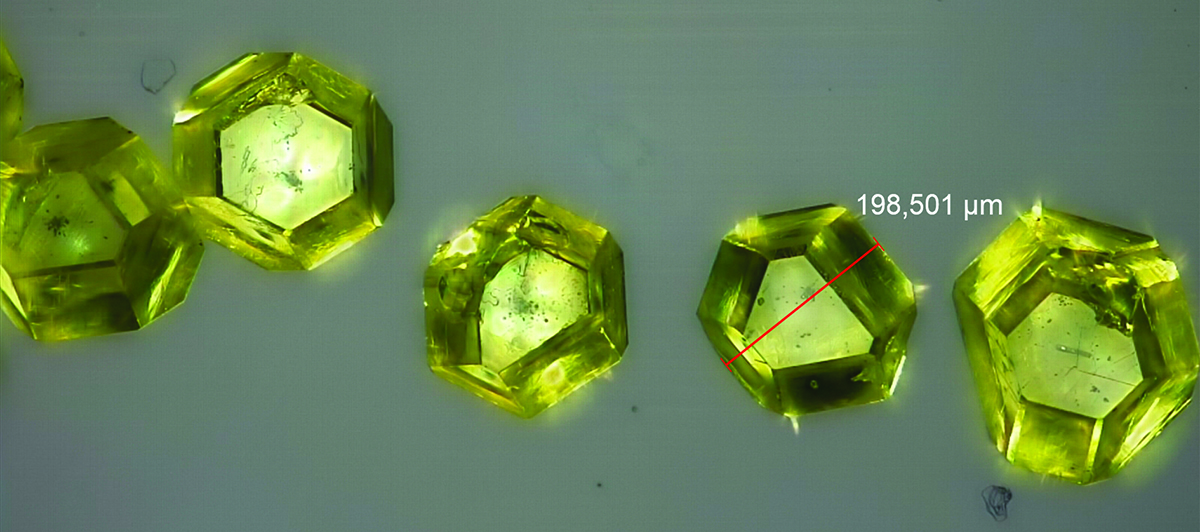
Natural and synthetic diamond
Historically, industry has used both natural diamond and synthetic diamond. The development of synthetic diamond has made it possible to obtain products with characteristics selected according to the application, with different crystal shapes and different levels of toughness or friability.
Crystal morphology influences behaviour during machining. Stronger, more regular crystals can be selected when greater resistance to mechanical stresses is required, while more friable grits can promote the renewal of cutting edges through crystal fracture.
Grit size, friability and concentration
Grit size defines the size of the abrasive particles and is one of the fundamental parameters in tool formulation. Different grit sizes are selected according to the type of operation, the required material removal rate and the desired surface quality.
Friability describes the tendency of a crystal to fracture under stress. It is not simply an indication of higher or lower quality: different characteristics meet different application requirements, and grit fracture can contribute to self-sharpening by generating new active cutting edges.
Concentration indicates the amount of superabrasive present in the working layer. Together with grit size, diamond characteristics and bond, it contributes to determining tool behaviour and must therefore be evaluated as part of the overall formulation.
Diamond and CBN
In the field of superabrasives, diamond is complemented by cubic boron nitride (CBN). The two materials are used in different application areas and form the basis of numerous tools for cutting, grinding, sharpening and precision machining.
How a diamond tool is made
In general terms, a diamond tool can be regarded as a system in which diamond or other superabrasive grits are retained by a bond or matrix and incorporated into the active part of the tool. The support and geometry vary considerably according to the application: a grinding wheel, blade, core bit or diamond wire bead responds to very different design requirements.
The bond does more than simply retain the diamond: it must work together with the abrasive grit and wear in a manner compatible with the process. Tool formulation therefore seeks a balance between cutting ability and tool life.
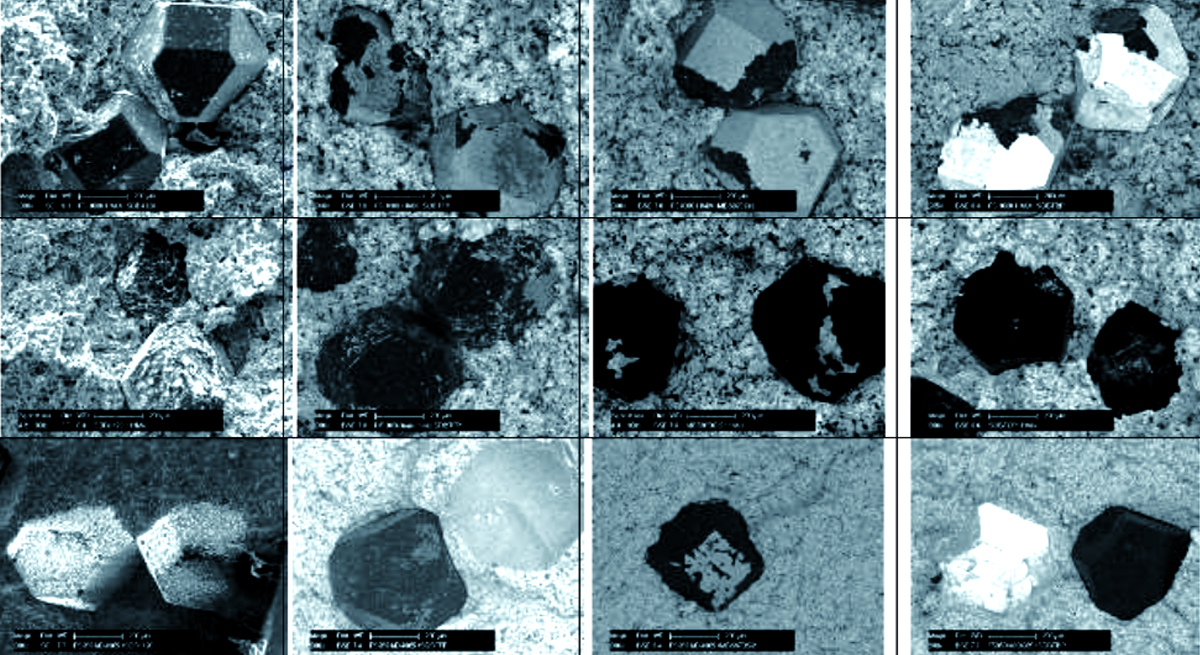
Main bond systems
Resin bonds. The superabrasive is incorporated into a matrix based on resins and other formulation components. These systems are used mainly for grinding wheels and abrasive operations, where the resin, fillers, thermal cycle and overall composition influence the final characteristics.
Sintered metal bonds. The crystals are distributed in a matrix produced from metal powders. Pressing and sintering are used to manufacture the active part of the tool, with formulations designed according to the material being processed and the required behaviour.
Electroplated tools. Diamond is fixed to the support by means of a metal deposit produced through electroplating processes. This technology makes it possible to manufacture tools with abrasive grits exposed on the working surface and with even complex geometries.
Vitrified bonds. Vitrified, or ceramic, bonds are used mainly in superabrasive grinding wheels. Production includes mixture preparation, forming and a firing cycle. Structure, density, abrasive grit-to-bond ratio and thermal cycle are key elements in their design.
Main types of diamond tools
Industrial diamond technology takes different forms depending on the operation. The main families include diamond blades and saws, diamond wires, diamond and superabrasive grinding wheels, core bits and drilling tools, profiling and shaped tools, and electroplated tools.
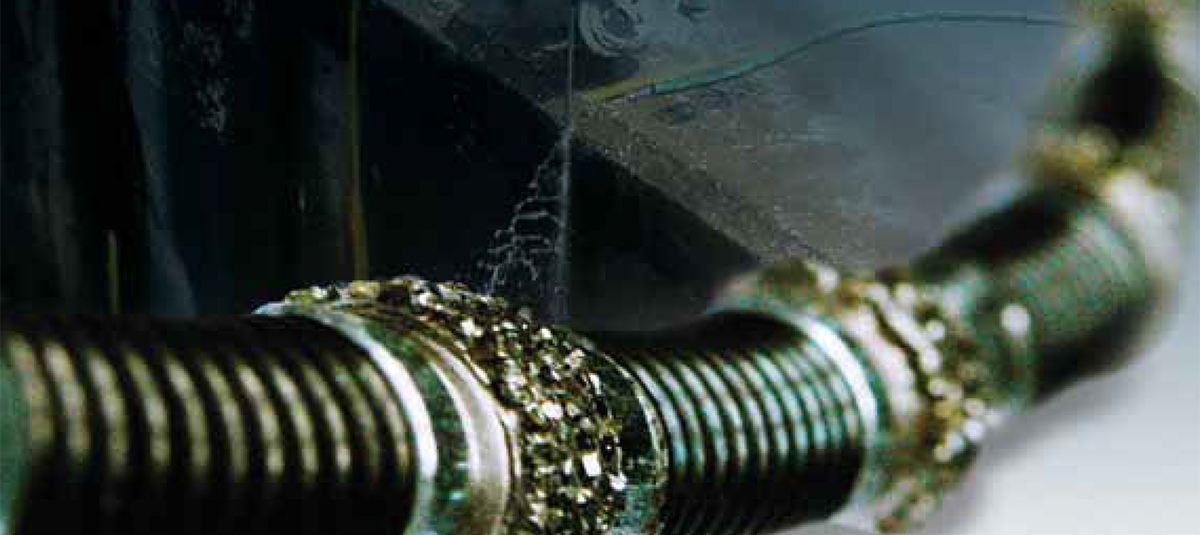
Diamond tool applications
Natural stone. Marble, granite and other natural stones represent one of the historical fields of application, from cutting to profiling and finishing.
Construction and controlled demolition. In concrete and construction materials, diamond tools are used for cutting and drilling; blades, core bits and wire systems are also employed in controlled and selective demolition operations.
Glass and ceramics. These materials require operations in which precision, control of material removal and surface quality are particularly important.
Precision engineering. Diamond and superabrasive grinding wheels are used for grinding and sharpening high-hardness materials.
Composites and special materials. The evolution of industrial materials has further expanded the range of applications and may require solutions specifically designed for the individual process.
A technology based on balance
The performance of a diamond tool does not depend on a single element. The result comes from the interaction between diamond type, crystal shape, grit size, concentration, bond, tool structure and operating conditions. Changing one of these parameters can alter the behaviour of the entire system.
For this reason, diamond tool technology encompasses expertise ranging from superabrasives to powder metallurgy, from polymeric materials to ceramic bonds, as well as machine design and the analysis of actual operating conditions.