Dry and wet cutting with diamond tools
Operational observations from real job sites

Operations involving diamond tools are now part of everyday activities on many job sites, both large and small. Cutting with power cutters, wall chasing, and single or repeated core drilling are often short-duration tasks, yet they are performed repeatedly throughout the working day. It is precisely this combination of brief interventions and repetitive operations that, in practice, may lead to an underestimation of the overall working context. Professional equipment is used, often of a very high standard, yet established operating methods tend to be repeated without being reconsidered in light of the available space, total exposure time, or the presence of other workers nearby.
In most cases, these are not large, highly structured job sites, but rather indoor environments, renovation projects, technical rooms, stairwells, parking facilities, or areas shared with other activities. These are real, dynamic contexts in which the job site coexists with everyday operations. Machines may change, but operational dynamics remain largely the same. Power cutters, wall chasers, core drilling units, and more complex cutting systems are selected based on accessibility, urgency, and the required outcome. The decision to work dry or wet is also frequently driven by immediate practicality rather than by a comprehensive assessment of operating conditions.
Every operation introduces common elements: dust dispersion, residues, noise, vibrations, splashing, and deposits on working surfaces. These aspects depend not only on the machine itself, but also on how it is integrated into the job site environment. Dry cutting is often chosen for its speed and ease of setup. It requires no water connections and allows immediate intervention even in confined spaces. Wet cutting, on the other hand, is typically perceived as more controlled and visually cleaner. In reality, both methods require proper attention and management. Dry operations generate airborne dust that must be properly controlled, while wet operations produce slurry and residues that must be collected and handled.
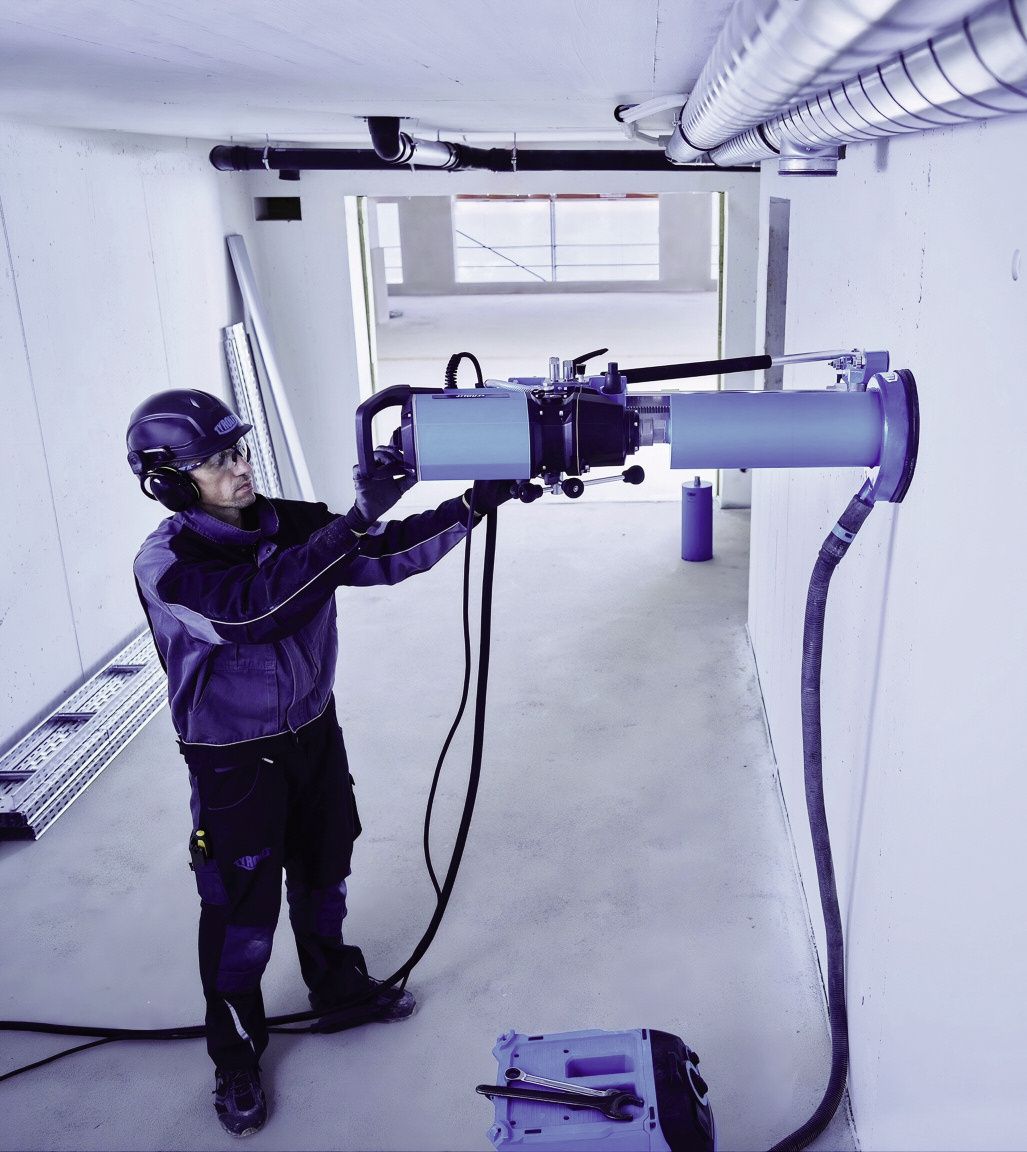
In both cases, what matters is not only the cutting phase itself, but also what occurs before, during, and after the intervention. Every professional diamond tool is designed to operate under demanding conditions and is supplied with clear guidelines for proper use. These guidelines stem from the direct experience of manufacturers who design and test equipment in real-world scenarios. Following them does not restrict operations; rather, it ensures that equipment is used in accordance with its intended purpose, in a consistent and predictable manner. Beyond the differences between dry and wet cutting, or between various types of applications, certain precautions represent an operational constant.
The use of personal protective equipment (PPE), appropriate to the activity being performed, accompanies the operator throughout the entire working day. Even brief operations generate dust and residues that may remain in the environment or settle on surrounding surfaces. In this context, equipment such as safety vacuum systems and wet vacuums should not be regarded as accessories, but as integral components of the working method. Their function is to contain generated materials, maintain control of the operational area, and reduce the spread of dust and slurry within the job site. Continuous use contributes to maintaining order and operational continuity, particularly in enclosed or shared environments.
Certain conditions demand an increased level of attention: prolonged operations, poorly ventilated environments, the simultaneous presence of multiple workers, or alternating dry and wet processes within the same area. In such cases, operator protection and environmental management become even more critical. A controlled work area enables greater precision and reduces the need for corrective actions at later stages. In daily practice, the choice between dry and wet cutting is often made quickly, influenced by space constraints, timing, and convenience. However, neither method automatically resolves issues related to order and safety. Dry cutting requires appropriate systems for dust containment; wet cutting requires solutions for collecting and managing generated slurry.
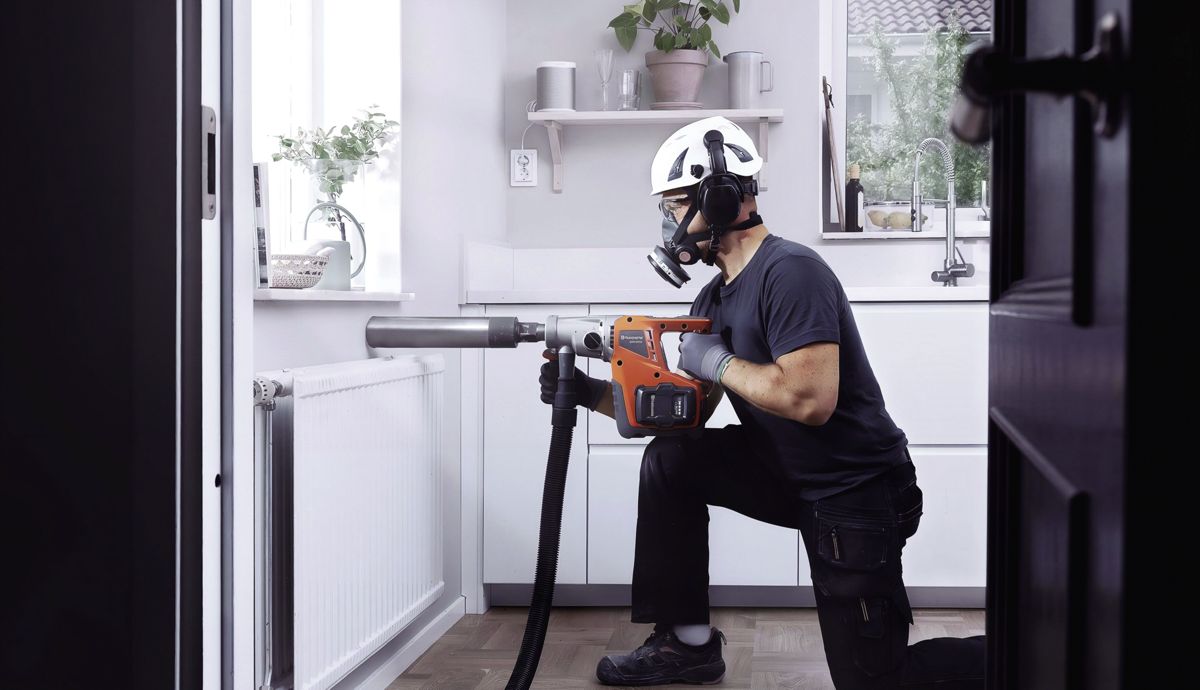
Separating the act of cutting from the management of its operational consequences remains one of the most common mistakes. Defining a dedicated work area, anticipating what will occur during and immediately after the intervention, and employing suitable extraction and collection systems allows long-term control of the job site. The key difference lies not in the selected technique, but in the level of organization applied. Every operation leaves a trace. In wet cutting, this trace is immediately visible in the form of cutting water and residues; in dry cutting, it may be less evident, yet equally present. The issue arises not from individual interventions, but from accumulation and repetition.
Slippery surfaces, deposits along transit routes, and work areas extending beyond necessity affect organization, safety, and overall work quality. Management means anticipation. Anticipating where dust and slurry will accumulate, how they will be collected, and how the work area will be maintained during operations - not merely at completion - supports order and control. Even simple solutions, when applied consistently, contribute significantly to maintaining operational efficiency. A clean job site is not merely an aesthetic matter. It represents a working method that enhances operator safety and supports environmental responsibility. Observing what remains on surfaces, what is collected, and what is effectively contained helps interpret the job site as an integrated system in which each phase influences the next. Proper dust and slurry management does not complicate operations; rather, it makes them more predictable, more efficient, and more professional.
Photos courtesy of Husqvarna Italia and Tyrolit Italia