Poligem celebrates its thirtieth anniversary
On 29 July, we mark the thirtieth anniversary of the founding of Poligem S.r.l. This year is also my fortieth anniversary in the industrial diamond sector. My journey began thanks to my father: in the second half of the 1960s, he started manufacturing single-point diamond tools and grinding wheel dressers for the mechanical engineering industry. He studied the properties of natural diamond in great depth and fundamentally transformed machining techniques, paving the way for the widespread adoption of diamond tools across a wide range of applications, from the machining of precious metals in jewelry-making to innovative in-process gauging systems.
His determination and curiosity proved contagious. Inspired by the advent of synthetic and polycrystalline diamonds in the 1970s, I began to take an interest in this wonderful, remarkably versatile material, and in 1986 I set up my own specialized distribution business serving tool manufacturers. I later had the opportunity to work at the only Italian company ever to produce synthetic and polycrystalline diamond: Supradiamant S.p.A. There I gained expertise not only in applications but also in manufacturing processes.
I founded Poligem in 1996 to distribute diamonds imported from Asia, putting the expertise I had acquired to good use by developing and calibrating our own quality grades while guaranteeing consistent product quality. This philosophy has enabled us to build strong relationships with our customers, many of which continue to this day, thirty years on. These are not merely supplier-customer relationships but, more often, genuine collaborations focused on identifying the applications where diamond performs at its best, driving progress in the machining of materials both old and new.
Diamond remains essential to a great many technologies today, but on this anniversary I would like to look to the future and to how diamond can take center stage in the innovations to come. My thoughts turn to the many properties of diamond that have so far been only partially exploited, and to the challenges facing the manufacturing industry as a result of technological change, artificial intelligence, and the shift from an apparently peaceful globalization to an increasingly confrontational multipolar world in which every country must secure a certain degree of autonomy.
Let us start with hardness, which until now has been exploited chiefly for machining hard materials such as granite and silicon. Yet diamond’s hardness also translates into unrivaled abrasion resistance. Hence its potential use in wear-resistant coatings, or in the manufacture of functional components offering longer service life and superior performance compared with those made from traditional materials: think of nozzles or slideways in machine tools, but also of surfaces that must maintain a precise and constant interference fit over time (clamping washers, mechanical clutches, and so on).
Another property of diamond that has yet to be fully exploited is its ability to dissipate heat, combined with its excellent electrical insulation, qualities that make it an extremely attractive material for next-generation chips. The demand for ever-smaller chips, designed to increase computing power per unit area, runs up against numerous obstacles that diamond could help overcome. In particular, thanks to its outstanding thermal conductivity, a heat spreader made of diamond can dissipate heat up to five times more efficiently than the materials currently in use, while still providing the electrical insulation needed to allow transistors to be packed ever closer together.
This makes it possible to reduce energy, water, and space consumption (consider the environmental impact of data centers as artificial intelligence continues to advance). Research is currently focused on producing chips made entirely of diamond which, when suitably engineered as a semiconductor, could even replace silicon altogether.
Finally, among the many properties of diamond yet to be exploited, I would like to mention its exceptional resistance to radiation. This unique characteristic holds great promise for the advancement of nuclear medicine, which many regard as one of the most promising approaches for treating diseases that remain difficult to cure today. It could also prove to be a major breakthrough in the energy field, enabling more precise monitoring of nuclear power plants while supporting the development of cleaner nuclear fusion technologies.
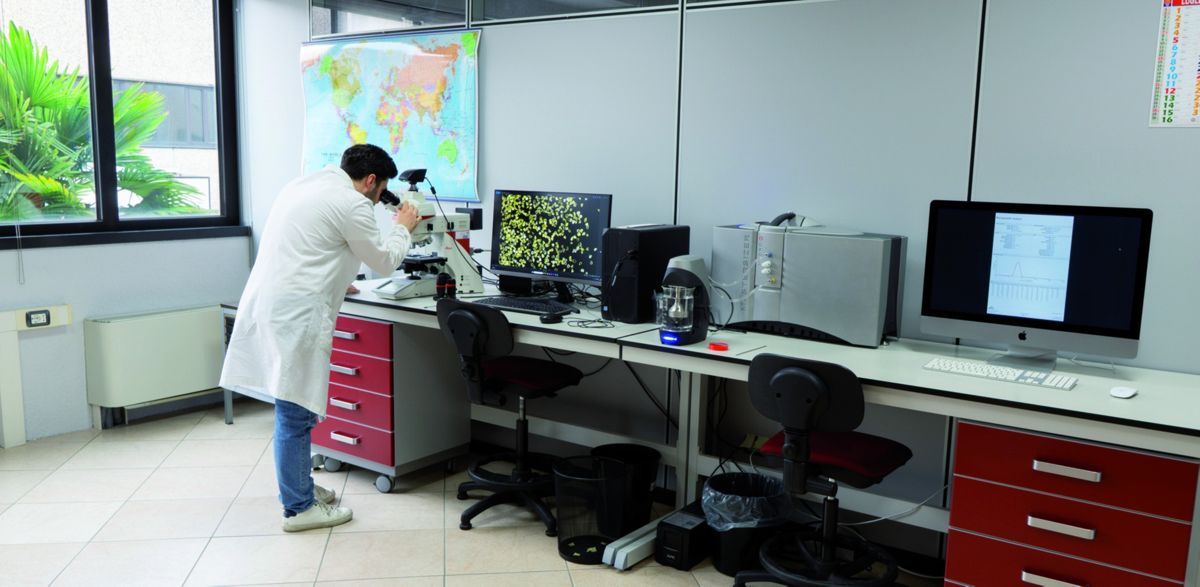
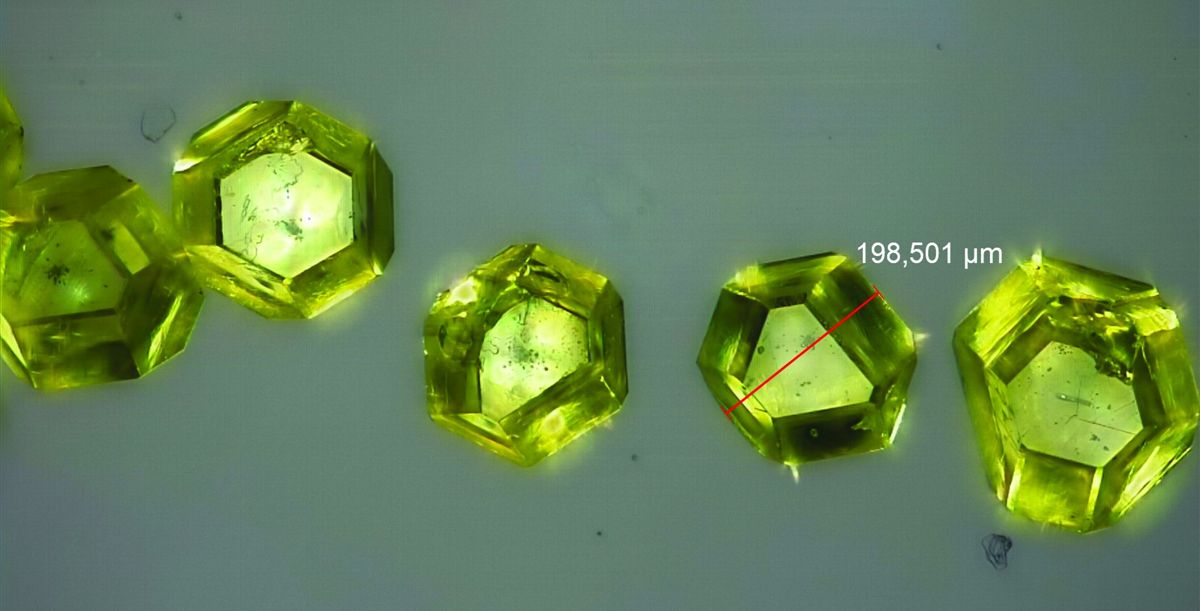
Thanks to the combined expertise of its people, accumulated over the years, Poligem is ready to take up these challenges, following the development of these emerging sectors, which will undoubtedly have significant spillover effects on more traditional industries as well. The technological investments made, such as Polilab, now equipped with the most up-to-date instruments to measure and evaluate diamonds, allow us to select and guarantee the product the customer requires. We want to stay true to our commitment: to promote the use of diamond in order to improve people’s quality of life while protecting the environment.